
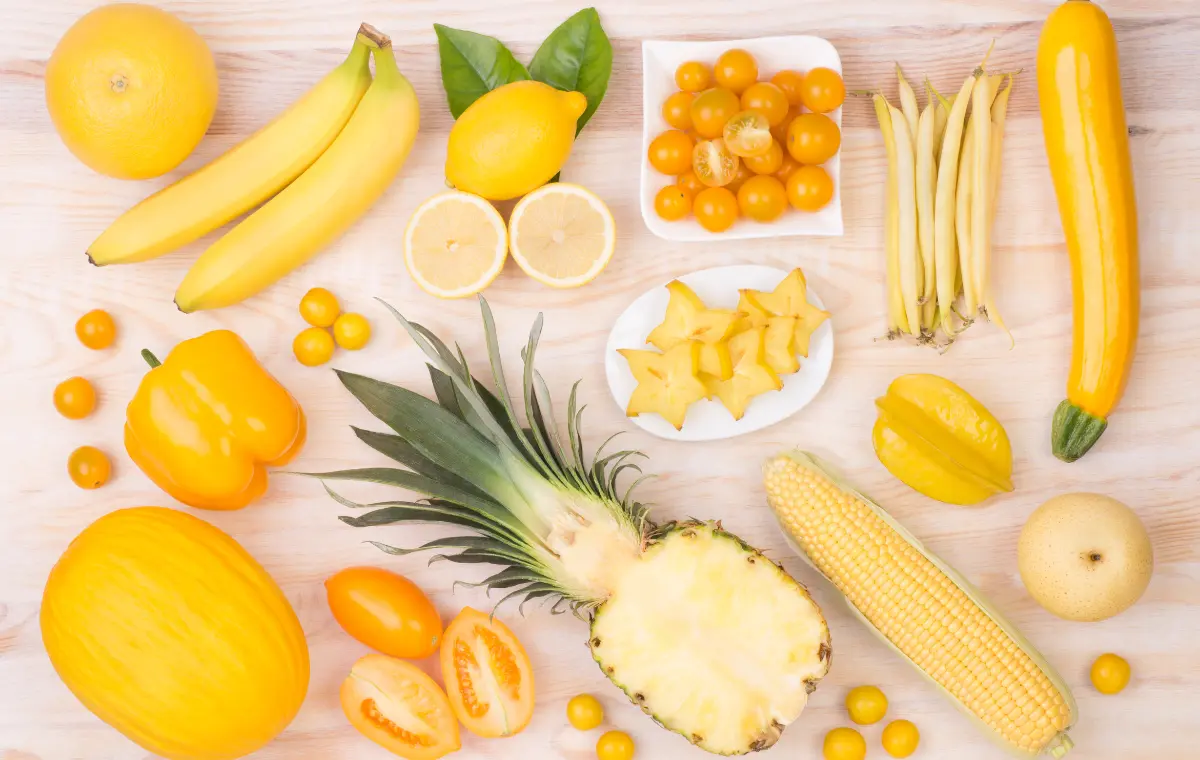
Have you ever stopped mid-bite into a banana and thought, “Hmm, why are so many fruits yellow?” If not, now’s the time!
Yellow fruits aren’t just a treat for your tastebuds — they’re a burst of sunshine, packed with nutrients, and an easy way to brighten up your vocabulary if you’re learning English.
This post is your fruity crash course: tasty, simple, and with just enough flavorful facts to impress both your body and your brain.
Ready to explore? Let’s dive in!
Small Round Yellow Fruits
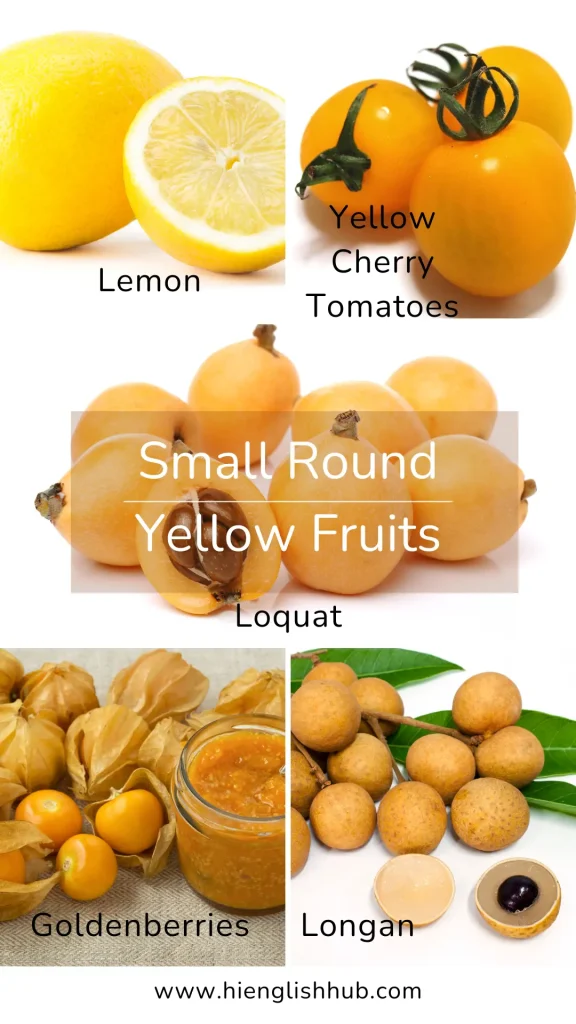
Lemon
- Health Benefits: High in Vitamin C, boosts immunity, aids digestion.
- How to Eat: You usually don’t eat them alone, but they’re easy to squeeze over food or mix into drinks. Or, you can use it in cooking. To get the most juice, roll a lemon on the counter before cutting. Then I usually use this small handheld lemon squeezer I got on Amazon to get every last drop — it’s quick, efficient, and mess-free (perfect for learners who love things simple and practical!).
One personal habit I’ve picked up — and honestly look forward to each morning — is mixing half a lemon with a tablespoon of apple cider vinegar (the kind with the “mother”) in a glass of warm water. I drink it on an empty stomach right after waking up. It’s like a gentle wake-up call for my system! It helps with digestion, gives me a small energy lift, and leaves me feeling like I’ve already done something good for myself before the day even begins.
If you find the taste too sour, you can always add a little honey to smooth it out — it makes the drink more enjoyable while still keeping all the health perks.
- How to Pick: Choose firm, bright yellow lemons (avoid green spots).
Yellow Cherry Tomatoes
- Health Benefits: Packed with antioxidants like lycopene and beta-carotene, they’re great for your eyes and heart.
- How to Eat: They’re sweet, juicy, and bite-sized. Eat fresh as a snack or add to desserts. Just rinse and pop them into your mouth — no cutting or peeling needed!
- How to Pick: When picking, choose tomatoes that are firm, smooth, and bright yellow. Avoid any with soft spots, wrinkling, or cracks — they should look fresh and feel slightly springy when gently squeezed.
Loquat
These sweet-tart fruits have smooth yellow skin and large brown seeds inside.
- Health Benefits: They’re high in vitamin A, fibre, and antioxidants, making them a nutritious addition to your fruit list.
- How to Eat: Peel the husk and rinse before eating. You can eat them fresh, or use them in jams, jellies, or baked desserts.
- How to Pick: Look for loquats that are bright yellow, slightly soft to the touch, and free from bruises or blemishes. Avoid any that are overly hard or shriveled.
Goldenberries (Cape Gooseberries)
These small golden-orange berries come tucked inside delicate papery husks, almost like a gift waiting to be unwrapped.
- Health Benefits: Slightly tart and rich in vitamin A, C, and antioxidants, they’re great for your skin and immune system.
- How to Eat: Peel the husk and rinse before eating. You can enjoy them fresh or toss them into yogurt, oatmeal, or a salad for a tangy twist.
- How to Pick: Look for goldenberries with dry, light-brown husks that are still fully intact. A ripe berry should feel firm and look vibrant inside. Avoid ones that feel squishy or have shriveled skin — they’re likely past their prime.
Longan (Also Spelled Longyan)
Often referred to as “dragon eye fruit,” Longyan is similar to lychee and has translucent flesh with a sweet, floral flavor.
- Health Benefits: It’s rich in vitamin C and used in traditional Chinese medicine.
- How to Eat: Crack open the shell and remove the seed. Eat the juicy flesh raw or add to desserts and teas.
- How to Pick: Choose yellowish-brown fruit with firm, uncracked skin.
Small Yellow Fruits
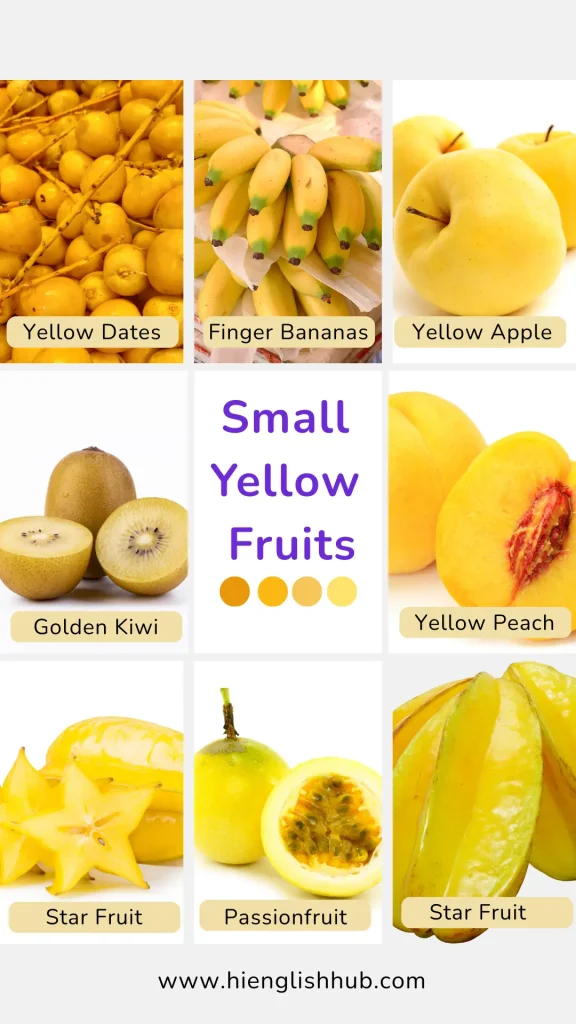
Yellow Dates
- Health Benefits: These oval-shaped fruits are mildly sweet and rich in fibre, potassium, and antioxidants.
- How to Eat: They’re typically eaten raw when fresh or dried. Just rinse and enjoy — no need to cut or peel.
- How to Pick: Choose yellow dates that are plump, smooth, and free of wrinkles or blemishes. They should have a vibrant yellow colour and feel firm but not hard.
Yellow Finger Bananas
Also known as baby bananas, these mini versions are sweeter than regular bananas.
- Health Benefits: They’re rich in potassium and vitamin B6.
- How to Eat: Just peel and eat!
- How to Pick: Look for finger bananas that are mostly yellow with a few brown freckles — these are perfectly ripe and extra sweet. If they’re still green, they need more time to ripen. Skip any with blackened or very soft spots, as they may be overripe or bruised.
Yellow Apple
Golden Delicious and other yellow apple varieties are crisp, mildly sweet, and perfect for snacking or baking.
- Health Benefits: They’re full of fibre and vitamin C.
- How to Eat: Rinse and slice — great raw or baked into pies, crisps, or oatmeal!
- How to Pick: Choose firm apples with smooth, golden skin free from bruises.
Golden Kiwi
This smooth-skinned cousin of the green kiwi has golden flesh and a milder, sweeter taste.
- Health Benefits: It’s rich in vitamin C, vitamin E, and fibre, making it a powerhouse for immune support and digestion.
- How to Eat: Slice in half and scoop out the flesh with a spoon, or peel and cut into chunks. It’s great on its own or as a topping for yogurt, cereal, or smoothies.
- How to Pick: Look for golden kiwis that yield slightly to gentle pressure. Avoid overly hard ones or those with wrinkled skin.
Yellow Peach
Yellow peaches are sweet, juicy, and bursting with flavor when in season.
- Health Benefits: They’re rich in vitamin A and C, and antioxidants.
- How to Eat: Rinse, slice around the pit, and enjoy fresh or grilled with yogurt or ice cream.
- How to Pick: Look for fruit that has a golden hue with a sweet aroma and slight softness.
Star Fruit (Carambola)
This tropical fruit is star-shaped when sliced and has a crisp, slightly tangy taste.
- Health Benefits: It’s low in calories but high in vitamin C and fibre.
- How to Eat: Rinse, slice crosswise into star shapes, and eat whole — no peeling needed.
- How to Pick: Choose bright yellow fruit with minimal green edges and no brown spots.
Yellow Passionfruit
Yellow passionfruit has a wrinkled rind when ripe and is packed with aromatic, jelly-like pulp and crunchy black seeds.
- Health Benefits: Rich in fibre, vitamin C, and beneficial plant compounds.
- How to Eat: Cut in half and scoop out the juicy pulp with a spoon.
- How to Pick: A wrinkly skin means it’s ripe — don’t be put off!
Big Yellow Fruit
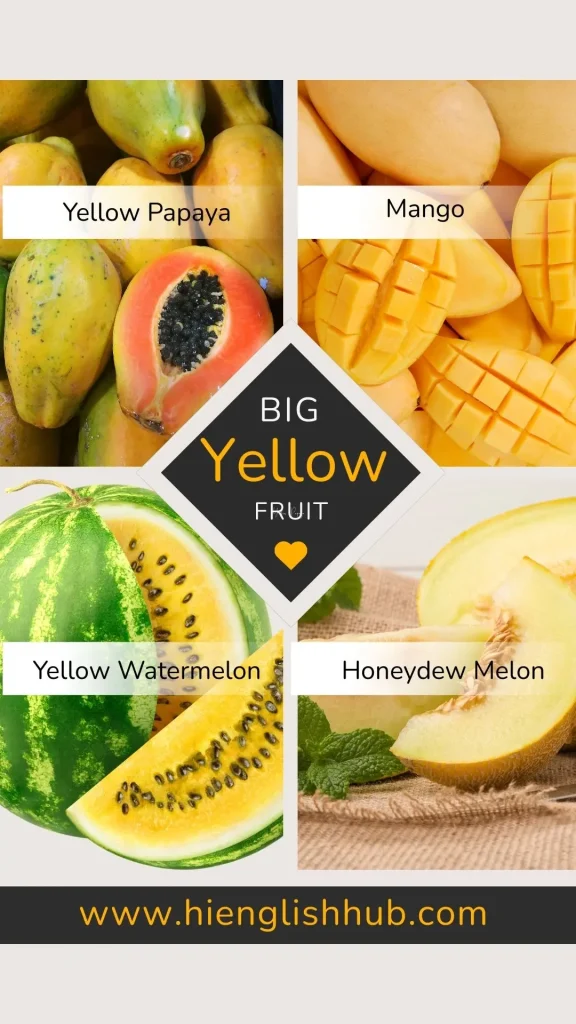
Yellow Papaya
Yellow-skinned papayas have soft, sweet orange flesh and contain small black seeds inside, making them a classic example of a yellow fruit with black seeds.
- Health Benefits: They’re great for digestion thanks to the enzyme papain.
- How to Eat: To eat, slice it in half, scoop out the seeds — make sure to get them all, as they can be quite bitter, and peel the skin before slicing.
- How to Pick: Choose yellow papayas that are mostly golden and slightly soft when pressed. Avoid overly green ones unless you plan to ripen them at home.
Mango
One of my all-time favorites!
Sweet, juicy, and bursting with tropical flavor, mangoes are a beloved yellow fruit enjoyed worldwide.
- Health Benefits: They’re high in vitamin C, vitamin A, and antioxidants — great for skin, immunity, and eye health.
- How to Eat: Slice off the sides around the large seed, score the flesh into cubes, and turn the skin inside out to easily scoop them out. Mango is delicious on its own, in smoothies, or over sticky rice as a classic Thai dessert!
- How to Pick: Ripe mangoes often have a fruity aroma near the stem, a slight give when gently squeezed, and a deep golden color. Some varieties also develop red or orange patches.
Yellow Watermelon
A fun surprise! Unlike red watermelon, this variety is golden inside and tastes even sweeter.
- Health Benefits: It’s hydrating and rich in antioxidants.
- How to Eat: Just cut and enjoy like a regular watermelon — seeds are edible but can be spit out.
- How to Pick: Look for a creamy yellow spot on one side — this is the ground spot where it rested on the field. A rich color here is a sign of ripeness. Give it a tap; a deep, hollow sound means it’s likely juicy and ready to eat. It should feel heavy for its size and have firm, matte skin.
Honeydew Melon
This round, smooth-skinned melon has pale yellow skin and light green to yellowish flesh.
- Health Benefits: It’s sweet, hydrating, and packed with vitamin C and potassium.
- How to Eat: Slice in half, scoop out the seeds, and cut into wedges or cubes. Enjoy it chilled for a refreshing snack or dessert.
- How to Pick: Look for a creamy yellow skin with a slightly waxy texture and a sweet aroma at the stem end. It should feel heavy for its size and have a slight softness when pressed gently.
Long Yellow Fruit
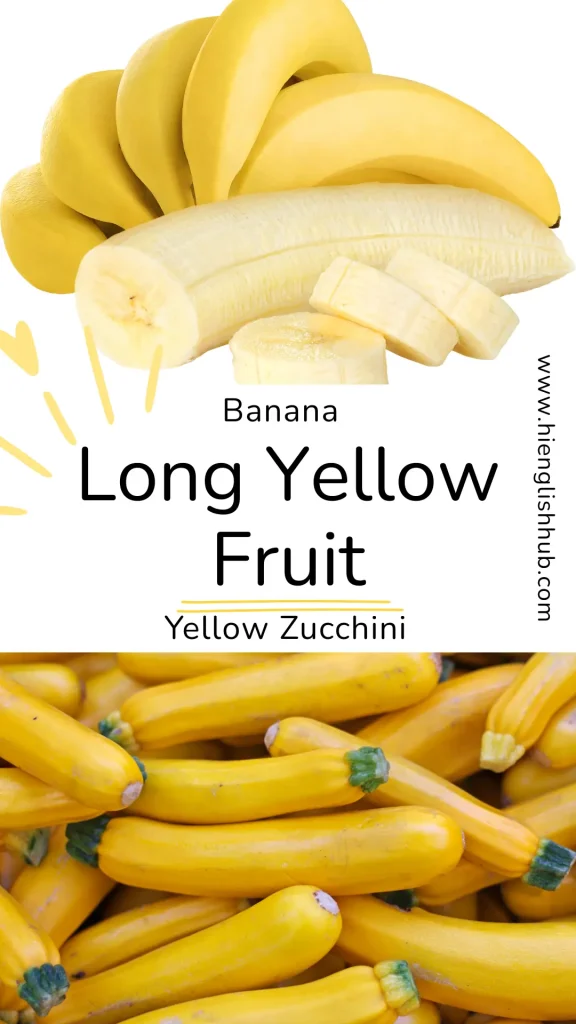
Banana
This is one of the most recognized fruits worldwide.
- Health Benefits: Rich in potassium, bananas are great for muscle function and digestion.
- How to Eat: Just peel and eat — no knife needed!
- How to Pick: When picking, choose bananas with small brown speckles for peak sweetness.
Yellow Zucchini (Summer Squash)
Though often used like a vegetable, zucchini is technically a fruit!
- Health Benefits: It’s high in water and vitamin A.
- How to Eat: Just rinse and slice — no peeling required. You can grill, stir-fry, or even spiralize it into noodles.
- How to Pick: Look for zucchini that are firm to the touch, bright yellow, and free of nicks or soft spots. Smaller ones tend to be sweeter and more tender than large ones.
Spiky Yellow Fruit
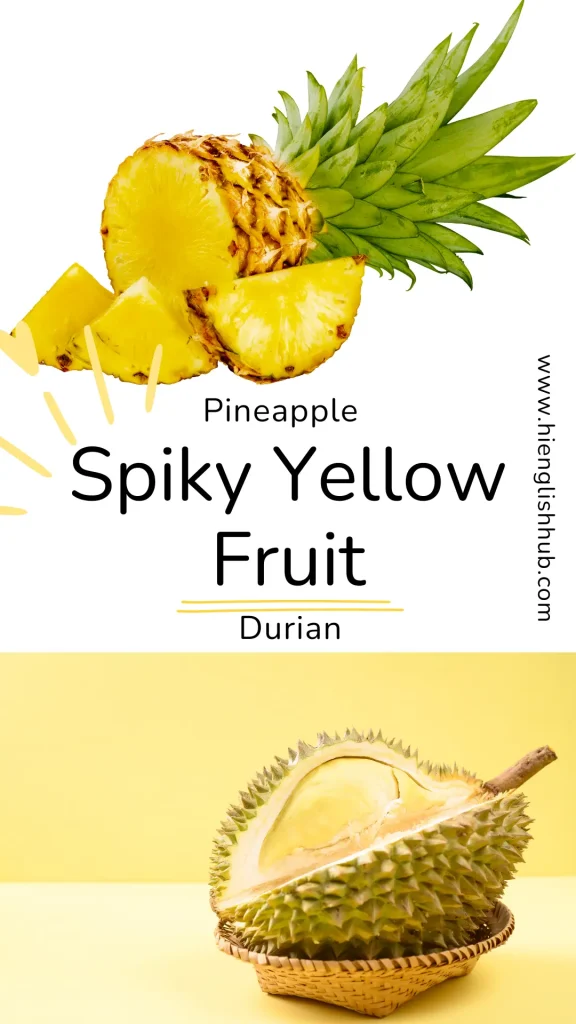
Pineapple
A tropical favorite! Pineapples are spiky on the outside but sweet and juicy inside.
If you ever visit Thailand or other tropical countries, pineapple is a must-try — not just because it’s affordable, but because it’s incredibly sweet and juicy.
You might even come across tiny pineapples, which are extra fragrant and almost candy-like in flavor!
And don’t miss out on trying Thai pineapple fried rice — it’s often served in a hollowed-out pineapple and looks as good as it tastes.
There’s also a classic cocktail made with pineapple juice that you might know: the piña colada. Sweet, creamy, and tropical — it’s like vacation in a glass.
Honestly, just writing this is making my mouth water!
- Health Benefits: They’re loaded with vitamin C and enzymes that help with inflammation and digestion.
- How to Eat: To eat, cut off the top and bottom, trim the sides, then slice into rings or chunks.
- How to Pick: A good pineapple should be golden around the base and give off a sweet, tropical smell. Gently squeeze it — it should be firm with a slight give. One easy trick: try pulling one of the center leaves. If it comes out easily, chances are it’s ripe and ready to go.
This video shows you exactly how to cut it the easy way!
Durian
Known as the “king of fruits,” durian has a thick, spiky yellowish-green shell and a strong smell that some love and others avoid.
- Health Benefits: The creamy yellow flesh is rich in healthy fats, fibre, and vitamin C. It’s high in calories but nutrient-dense.
- How to Eat: Slice along the natural seams in the shell to open it, then scoop out the soft sections with a spoon. The texture is custard-like and the flavor is unique —sweet, savory, and nutty all at once.
- How to Pick: Choose durians that have a strong smell and give slightly when pressed. A hollow sound when tapped is also a good sign it’s ripe.
Bumpy Yellow Fruit
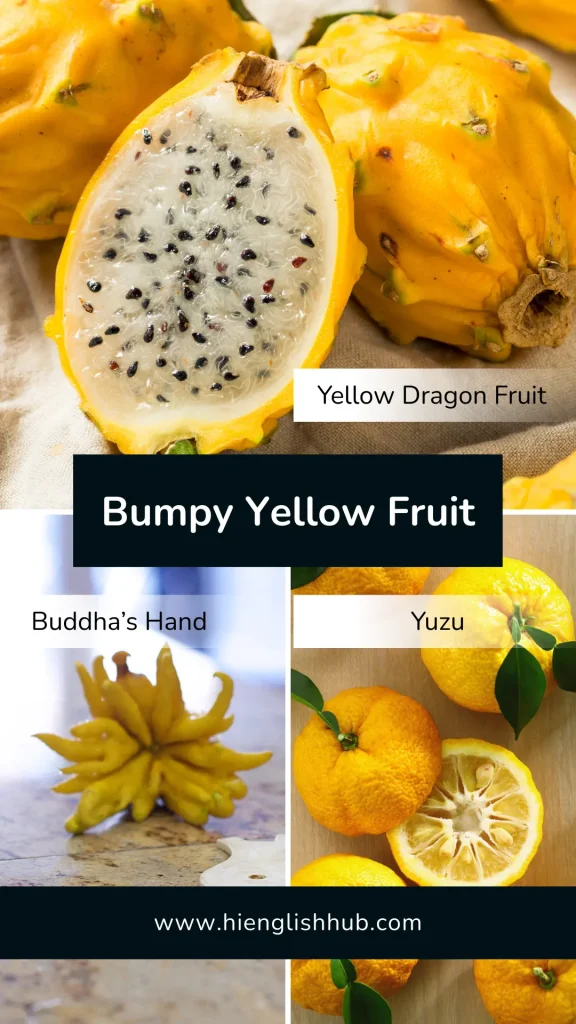
Yellow Dragon Fruit
This bright yellow fruit has a spiky, scale-like skin and sweet white flesh dotted with black seeds.
- Health Benefits: It’s packed with antioxidants, fibre, and vitamin C, and it’s great for hydration.
- How to Eat: Slice it in half and scoop out the flesh with a spoon, or peel and cut into cubes. Great in smoothies or on desserts.
- How to Pick: Look for fruit that is bright yellow and slightly soft when pressed. Avoid any with shriveled or overly dry tips.
Buddha’s Hand (Citron)
This unique and eye-catching fruit looks like a bunch of yellow fingers stretching out from a central base — hence the name! While it has little to no juice or pulp, it’s prized for its strong lemony fragrance and is often used to flavor dishes, desserts, or even perfumes.
- Health Benefits: Buddha’s Hand is rich in antioxidants and vitamin C. It’s also known in traditional medicine for its potential to aid digestion, improve circulation, and uplift mood due to its aromatic properties.
- How to Eat: You don’t actually eat it like other fruits. Instead, slice or grate the rind to add zest to dishes or candy the peel for a sweet treat.
- How to Pick: Choose Buddha’s Hand that is bright yellow and firm, with no green patches or signs of drying out. The more spread out the fingers, the more mature and aromatic the fruit tends to be.
Yuzu
A fragrant fruit used mostly in Japanese and Korean cooking. It’s sour, like a lemon.
- Health Benefits: Yuzu is packed with antioxidants and vitamin C, which can help boost immunity, improve skin health, and reduce inflammation.
- How to Eat: Yuzu is rarely eaten raw. Instead, use the juice or zest to add a bright, tangy kick to sauces, dressings, marinades, teas, and desserts.
- How to Pick: Choose yuzu that feels heavy for its size, has fragrant skin, and a slightly soft texture. Avoid overly hard or dried-out fruits.
Final Thoughts
Yellow fruits are more than just pretty faces in your fruit bowl — they’re nutrient-rich, easy to prepare, and perfect for learners who want to build both health and vocabulary.
Found a new favorite fruit from this list? Share this post with a fruit lover — it’s a juicy way to learn together!
Which yellow fruit is your favorite? Let me know in the comments!